Semi-Automatic or Automatic Tray Sealer: How to Make the Right Choice
When a Semi-Automatic Tray Sealer Is the Best Choice
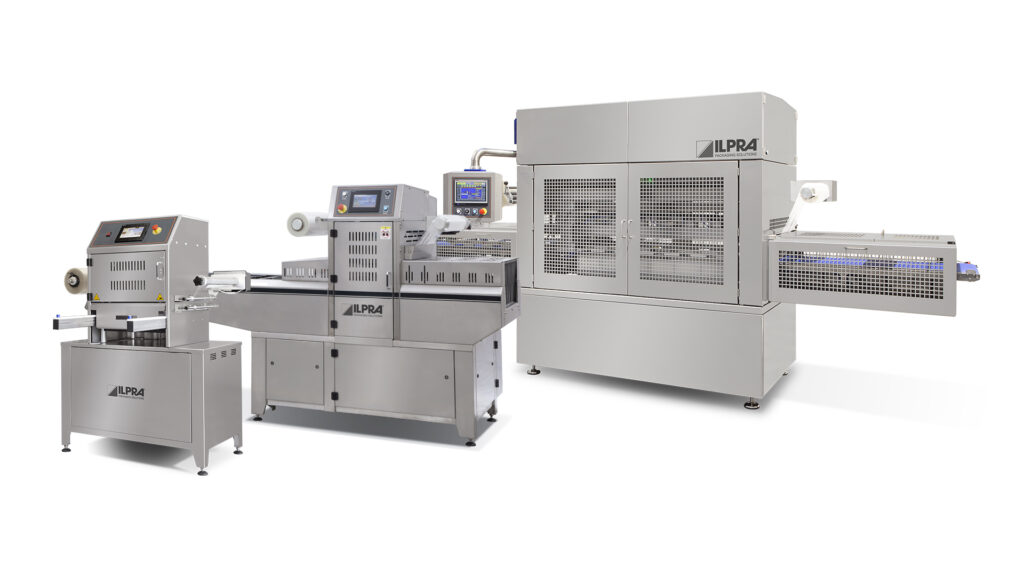
Semi-automatic tray sealers are often associated with small-scale production, but this perception does not fully reflect their potential.
Many companies choose a drawer-type tray sealer even for significant production volumes because they need to manage highly variable operations throughout the day. Frequent format changes, small batches, seasonal products, or customized product lines require a high degree of flexibility, which a semi-automatic machine can provide in a simple and efficient way.
Workforce organization also plays an important role. When operators are already involved in activities such as product preparation, portioning, or quality control, a semi-automatic tray sealer can maintain an efficient packaging process without the need to invest in a fully automated line.
Available Space Can Make the Difference
One of the most overlooked factors when selecting a tray sealer is the amount of available production space.
Not every facility has enough room to accommodate a complete automatic line, including loading systems, conveyors, and tray-handling equipment. In many food production facilities, central kitchens, and existing processing areas, optimizing available space is a key consideration.
In these situations, a semi-automatic tray sealer can deliver excellent performance while occupying significantly less floor space than a fully automated solution.
When Automation Becomes a Strategic Advantage
The decision to invest in an automatic tray sealer is not driven solely by the need to increase production capacity.
More often, the real advantage lies in reducing dependence on manual labor. In a market where finding qualified operators is becoming increasingly challenging, many companies turn to automation to create a more stable, efficient, and predictable production process.
In addition, an automatic line helps standardize operations, reduce repetitive manual tasks, and manage production peaks more effectively, especially when supplying large retailers or customers who require consistent year-round production.
The Product You Package Matters
The characteristics of the product itself can also play a crucial role in determining the most suitable solution.
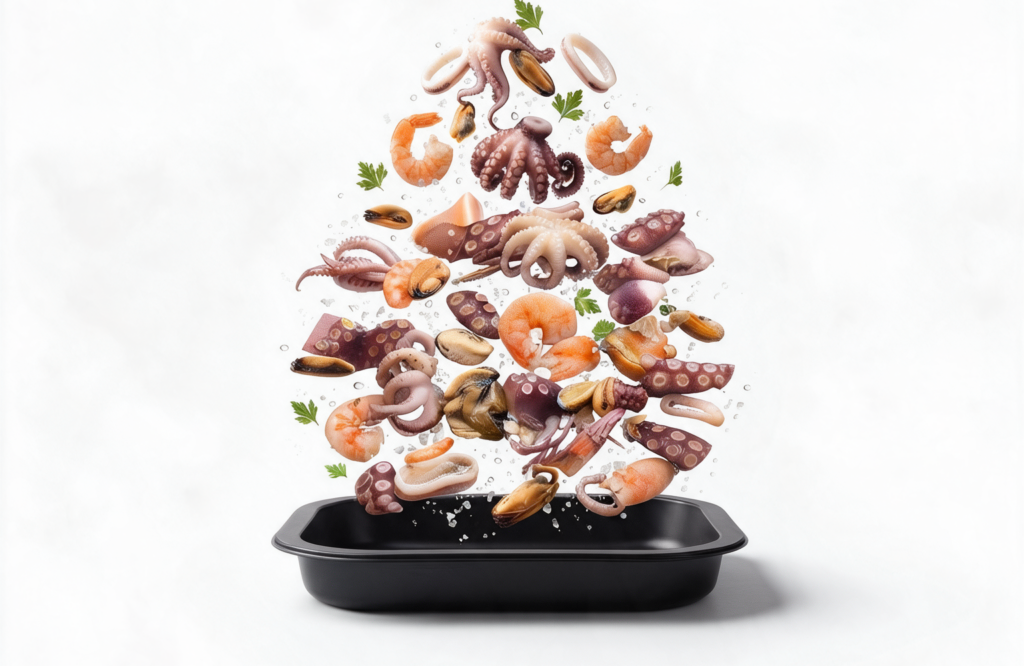
A premium ready-meal producer with multiple recipes and frequent format changes may achieve excellent results with a high-performance semi-automatic machine. On the other hand, companies packaging a limited number of standardized products in continuous production can maximize the benefits of automation.
For this reason, companies should not focus exclusively on how many trays they produce per hour. It is equally important to consider how many different products are being packaged and how often production changes occur.
MAP and Skin Packaging: High Quality in Both Solutions
From a packaging quality perspective, there is often little difference between a semi-automatic and an automatic tray sealer.
Technologies such as Modified Atmosphere Packaging (MAP) and Skin Packaging can be successfully integrated into both configurations, ensuring high standards of product preservation, presentation, and shelf life regardless of the chosen level of automation.
The Right Question Is Not “How Much Do I Produce?”
The real question is: What is the production model of my business?
A semi-automatic tray sealer is often the ideal solution when flexibility, compact dimensions, lower investment costs, and frequent format changes are required. An automatic tray sealer becomes the preferred choice when the goal is to improve overall efficiency, reduce manual intervention, and integrate packaging into a continuous production line.
Ultimately, the most effective decision comes from analyzing the entire production process rather than simply counting the number of trays packaged per hour. The most competitive companies evaluate automation, workflow organization, plant layout, and growth objectives as part of a single strategy designed to support long-term efficiency and business development.